Tankless vs Tank Water Heaters: The Short Answer
A tank heater costs less to buy and install and suits most homes well. A tankless heater costs about twice as much up front, lasts longer, uses less energy, and supplies hot water without a storage limit, as long as its flow rate matches your home. The right choice depends on how much hot water you use at once, how long you plan to stay, and what your current setup can support without costly upgrades.
How Each One Works
A tank heater stores hot water and keeps it ready. Most homes use a 40 to 50 gallon tank. The burner or the elements cycle on and off all day to hold that stored water at the set temperature. When the tank empties faster than it can recover, the water runs lukewarm until the heater catches up.
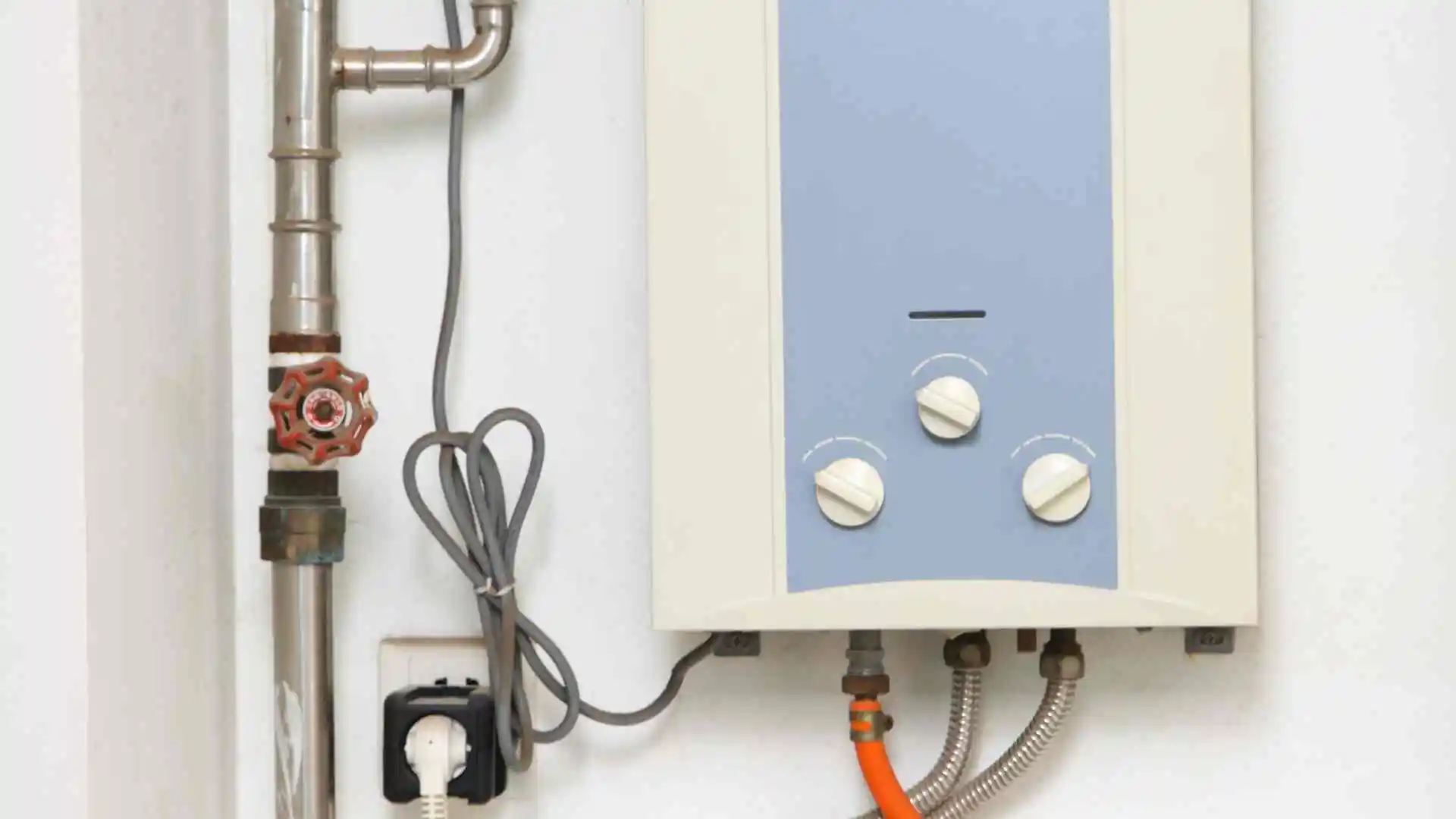
A tankless heater stores nothing. Cold water flows through the unit only when a tap opens, and a gas burner or electric elements heat it on the way through. The limit is not a stored volume but a flow rate, measured in gallons per minute. Open more taps than the unit can serve at once and the flow or the temperature suffers.
The Comparison at a Glance
- Installed cost. Tank heaters run $1,200 to $3,500 installed. Gas tankless heaters run $3,000 to $6,500, and electric whole home units run $2,000 to $4,500.
- Lifespan. Tank heaters last 8 to 12 years. Tankless heaters last 15 to 20 years with descaling.
- Energy use. Tankless units heat water only when it is needed. Tank units spend energy all day holding stored water hot.
- Hot water supply. A tank is limited by its size and recovery time. A tankless unit supplies hot water continuously, within its flow rate.
- Space. A tank needs floor space. A tankless unit mounts on a wall and frees that floor area.
- Upkeep. A tank needs a yearly flush and an anode rod check. A tankless unit needs yearly descaling.
- Installation. A tank swap is usually the simple job. A first tankless install often adds venting, gas, or electrical work.
Cost, Up Front and Over Time
The tank wins the first bill and it is not close. Our water heater replacement cost guide prices a full tank replacement at $1,200 to $3,500 installed, including the unit, labor, permits, and haul away. A gas tankless install runs $3,000 to $6,500, and an electric whole home tankless unit runs $2,000 to $4,500.
The gap grows when a tankless unit goes into a home built for a tank. Most gas tankless units need a larger gas line than the tank they replace, plus new venting. Electric units need no venting, but a home that needs a panel upgrade can add $1,500 to $3,000 for that work alone. Permit fees usually run $50 to $300 for either type.
Over time the math narrows. A tankless unit lasts roughly twice as long, so a household that stays put may buy one tankless heater in the years it would have bought two tanks. Ask for written quotes on both types before you run that math on national ranges. You can get free quotes for both options and compare the real totals side by side.
Hot Water Supply, the Real Daily Difference
This is the difference you will feel every morning. A 50 gallon tank delivers a strong supply until the stored hot water is used up, then it needs recovery time. Back to back showers, a dishwasher, and laundry in the same hour can outrun it, and the last shower runs cold.
A correctly sized tankless unit does not run out in that way. It keeps heating as long as a tap stays open. Its limit shows up differently. Run two showers, a dishwasher, and a washing machine at once and you may pass the flow rate the unit can heat, so pressure drops or the water cools. Sizing is the whole game. A unit chosen for peak demand feels endless. One chosen for average demand disappoints on busy mornings.
Energy Use and the Honest Payback Math
Tankless units are more efficient because they skip standby loss, the energy a tank spends holding water hot when nobody uses it. The savings are real but modest. In the worked example our replacement cost guide uses, a tankless install that costs about $2,500 more than a tank and saves $100 to $150 a year on energy takes well over a decade to pay back on efficiency alone.
So buy tankless for the right reasons. The strong case is the longer life, the continuous supply, and the saved floor space, not a promise that the unit pays for itself in a few years.
Lifespan and Upkeep
Tank heaters last 8 to 12 years. The tank itself is the weak point. Years of heating cycles and standing water corrode it from inside. The anode rod inside slows that corrosion by wearing away first, and once the rod is spent the tank ages much faster. A leak from the tank body ends the story, because a leaking tank cannot be repaired in any lasting way.
Tankless heaters last 15 to 20 years. There is no stored water and no tank to rust through, and main parts can often be replaced one at a time. The trade is maintenance. Scale builds on the heat exchanger, and yearly descaling protects that long life. A professional descaling and service visit usually runs $150 to $300.
Either type rewards a yearly look. Flush a tank once a year, check its anode rod, and watch for early leaks. Keep up the descaling schedule on a tankless unit, especially on hard water.
Space and Installation
A tankless unit is about the size of a suitcase and mounts on a wall. In a small home or a garage where floor space matters, giving back the footprint of a 50 gallon tank is a real gain. A tank needs its floor spot, clearance around it, and a drain pan where code asks for one.
Installation effort runs the other way. A like for like tank swap usually takes a few hours. A first tankless installation can take a full day or more once venting, a larger gas line, a condensate drain, or heavy electrical work is counted. Most cities require a permit for either type, and the inspection checks the venting, the gas connections, and the pressure relief setup.
Two special cases are worth naming. If only one distant bathroom waits too long for hot water, a small unit at that fixture may cost less than replacing the central heater, and our guide to a point of use water heater covers where those units make sense. In a manufactured home the rules change again, because its heater must carry the right approval for that housing type, as our mobile home water heater guide explains.
Which Type Fits Which Home
- Choose a tank if your budget is the deciding factor, if you need a fast emergency replacement, or if you expect to sell within a few years and will not use the longer tankless life.
- Choose a tank if your household uses a lot of hot water at the same moment and a right sized tankless unit prices out too high. A large tank handles peak demand simply.
- Choose tankless if you plan to stay for a long stretch, your gas supply and vent path are already workable, and you value the saved space and continuous supply.
- On hard water, count the upkeep honestly either way. Tankless life depends on regular descaling, and a tank reaches its full span only with flushing and anode rod checks.
The Honest Boundary on Doing It Yourself
You can do the comparison yourself, and you should. Sizing, fuel choice, and quote comparison are decisions a homeowner can research and own. The installation itself is different. Both types involve gas connections or heavy electrical work, venting that affects safety, and a permit in most cities.
The honest advice is to let a licensed plumber install either type, and to spend your own effort on getting line by line written quotes for both types, with venting, gas or electrical work, permits, and haul away each named.
Get Quotes for Both Types
America’s Service Plumber is a free matching service, not a plumbing company. You describe your home and your current heater once, and we connect you with licensed local plumbers who can quote a tank replacement, a tankless conversion, or both. Compare the quotes and hire only if the price and timing work for you. There is no cost and no obligation.
Get a free quote and see both totals for your home before you decide. It takes about a minute.
Frequently Asked Questions
Is a tankless water heater really better than a tank?
It is better on lifespan, energy use, and space, and worse on up front cost and installation effort. A tankless unit lasts 15 to 20 years against 8 to 12 for a tank, and it heats water only when a tap opens. Whether it is better for your home depends on your peak hot water use, your budget, and how long you plan to stay.
How long do tank and tankless water heaters last?
Tank water heaters last 8 to 12 years. Tankless water heaters last 15 to 20 years with regular descaling. Hard water, heavy use, and skipped maintenance shorten both figures, and a yearly flush for a tank or a yearly descale for a tankless unit is the simplest way to protect the full span.
Does a tankless water heater give endless hot water?
It gives continuous hot water within its flow rate. A tankless unit keeps heating as long as a tap is open, so it does not empty the way a tank does. Run more taps at once than its rated gallons per minute and the flow or the temperature will drop, which is why sizing for peak demand matters.
Is a tankless water heater worth the extra cost?
It can be, over a long stay. A tankless install costs roughly twice a tank install and lasts roughly twice as long, while saving a modest amount on energy each year. On energy savings alone the payback usually takes well over a decade, so the stronger reasons are lifespan, continuous supply, and saved space.
What does switching from a tank to tankless involve?
Most conversions add work beyond the unit itself. A gas tankless unit usually needs a larger gas line and new venting, a condensing model needs a condensate drain, and an electric unit may need heavy wiring or a panel upgrade. A permit and an inspection are required in most cities. Get the conversion work itemized in writing before you compare quotes.