Water Heater Leaking From the Top: The Short Answer
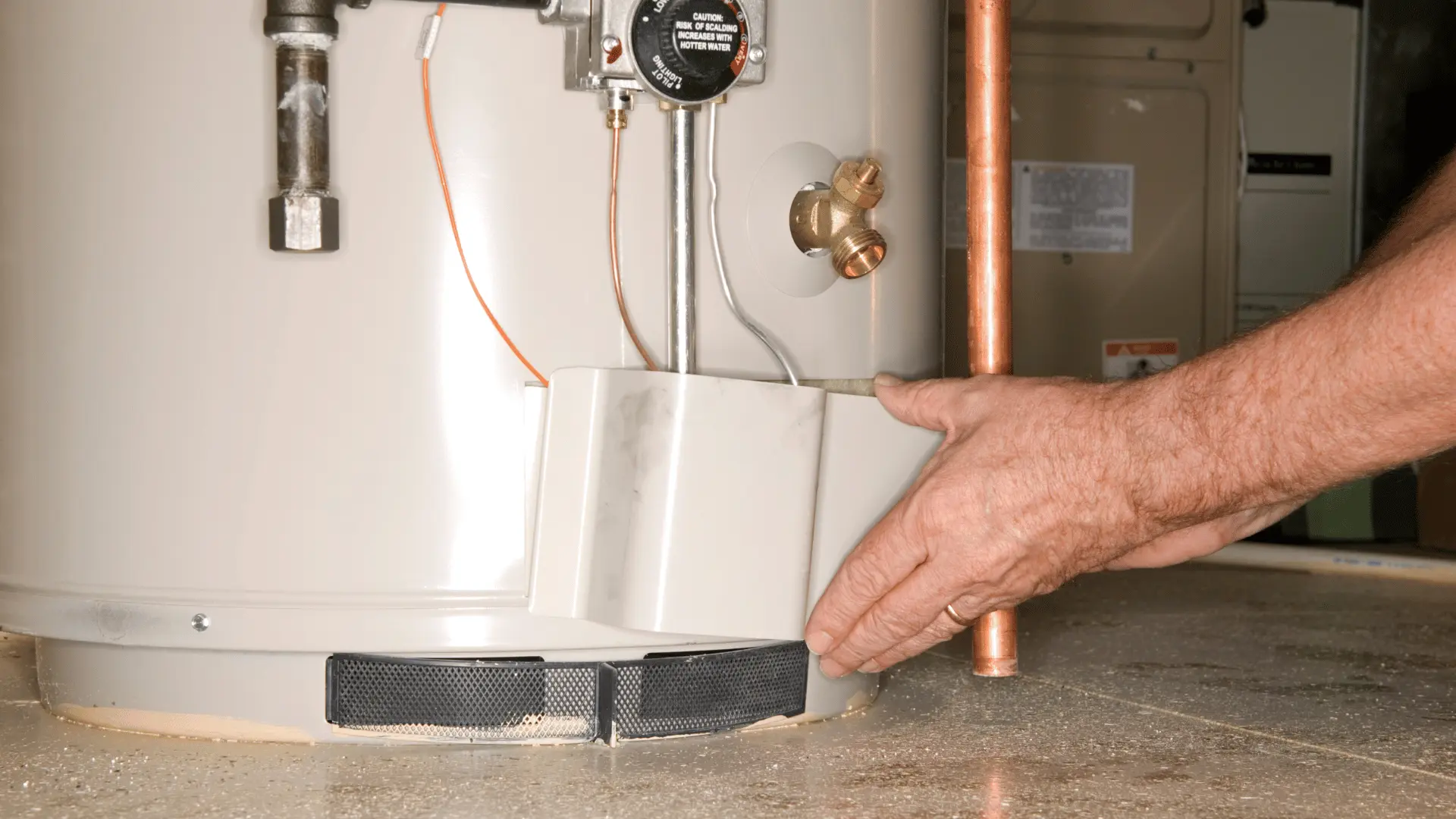
Water on top of a tank water heater usually comes from one of the connections up there rather than from the tank itself. The cold water inlet and the hot water outlet sit on top of most tank heaters, along with the anode rod port and, on many models, the temperature and pressure relief valve or its pipe. A loose or corroded fitting at any of those points lets water pool on the lid and run down the sides. The exception matters. If the tank metal at the top has corroded through, no fitting repair will hold, and the heater is at the end of its life.
Our general guide to a water heater leaking covers leaks at the top, the side, and the base together. This guide stays on the top of the tank, walks through each fitting you will find there, and helps you tell a small repair from a failing tank before you spend anything.
First Moves When You Find Water on Top
Start with safety, because the top of the heater is where water meets power and gas connections. For an electric heater, switch its breaker off at the panel. For a gas heater, turn the control on the tank to pilot and close the gas valve only if you can do so without standing in water. If you smell gas at any point, stop, leave the area, and get help from outside the home.
Next, close the cold water supply valve above the heater. Turning the supply off stops more water entering the tank, which slows any pressurized leak at the top. Then dry the top of the tank with towels and mop up standing water around the base. Drying matters for diagnosis as well as for damage control. A dry starting point lets you watch where new water first appears.
Confirm the Water Is Really Coming From the Top
Not every wet tank top is a leak. Warm moist air meeting a cold inlet pipe can leave condensation that drips onto the lid, most often in humid weather or right after the tank fills with cold water. Condensation tends to form evenly on the pipe and lid and to stop once the tank heats up. A leak returns at one specific fitting, grows when a hot tap has just run, and keeps coming back after you dry the surface.
Rule out the neighbors as well. A pipe joint above the heater can also drip down onto it. Dry everything, wait an hour, and check with a dry paper towel pressed around each top fitting in turn. The fitting that wets the towel first is where to focus.
Cause One: The Inlet and Outlet Connections
The most common top leak is the simplest. The cold inlet and hot outlet connect to the tank through short threaded fittings, often joined to the house pipes with flexible connectors. Those joints work loose over years of heating and cooling, and the metal at the threads corrodes. Water then seeps at the joint, pools in the shallow lid, and may only show while the heater is firing or just after a long draw of hot water.
A joint that is merely loose can sometimes be snugged with a wrench, a quarter turn at a time, with the supply off and a second wrench holding the fitting so the tank connection does not twist. A joint that is green, white, or rust colored, or one that starts weeping again within days of tightening, has corrosion in the threads or a worn connector. That joint needs to be remade or replaced. This is ordinary plumber work, usually priced as a service call at $75 to $150 nationally plus the connector or fitting.
Cause Two: The Relief Valve and Its Pipe
The temperature and pressure relief valve is a safety device that opens if pressure or temperature inside the tank climbs too high. On many tank heaters it sits on top of the tank or high on the side, with a discharge pipe running down toward the floor. A leak at its base usually means its threaded connection has corroded or its seal has failed. Water that comes out of the discharge pipe itself is different. That means the valve has opened, and the cause, excess pressure, a failing valve, or a thermostat fault, needs finding rather than just a new fitting.
Never plug, cap, or ignore a discharging relief valve. It is the last guard against a dangerous pressure buildup. Valve replacement is a routine plumber job, but because the valve is a safety part, it belongs on the professional side of the line for most homeowners. If your heater shows other signs of giving up at the same time, our page on a failing water heater lists the sounds, smells, and performance changes that point toward replacement instead of another repair.
Cause Three: The Anode Rod Port
Under a hex head in the top of most tank heaters sits the anode rod, a metal rod that corrodes on purpose so the tank does not. Its port can seep when the rod is nearly consumed or when its threads corrode. Water from this port looks like water from any other top fitting, which is why a plumber checks it rather than guessing. Replacing a worn rod is maintenance that can add years to a sound tank, and a plumber can judge the rod and the port in the same visit that fixes the leak.
A rod needs clear space above the tank to lift out, so low ceilings and tight closets can make the job slower.
Cause Four: The Tank Itself Is Corroding
The answer nobody wants is also the one to rule in or out early. If water seeps through the tank metal around a top fitting, if rust streaks run from under the lid seam, or if several fittings start leaking in the same season, the steel at the top of the tank is likely thinning from the inside. There is no patch for a corroding tank, and a tank that has begun to go can progress from seeping to a large leak without much warning.
Age frames this judgment. Tank heaters commonly last 8 to 12 years. A top leak on a heater in that band, with rust at the seam, is usually a replacement decision, and a full replacement runs $1,200 to $3,500 installed nationally, including the unit, labor, permits, and hauling the old heater away. A top leak on a young heater with one clean fitting is a repair, and the age and condition gap between those two cases is exactly what a good plumber will walk you through.
What a Plumber Does, and What It Costs
A plumber starts dry, just as you did, and watches the top fittings under pressure to find the first wet point. Expect checking of each top connection, the relief valve, the anode rod, and the lid seam before quoting. Small fitting repairs are usually a service call at $75 to $150 plus a modest part. Get the quote in writing, with the part named, so you can compare it fairly.
You can get free quotes from local plumbers through our matching service, describe the leak as a top leak, and note the heater age and the fitting you suspect. That detail helps the plumber arrive with the right parts on the truck.
What You Can Do Yourself, and Where the Line Sits
You can safely shut off the power or gas control, close the cold supply, dry the tank, find the first wet fitting with a paper towel, and photograph the leak and the rating plate for the plumber. Snugging a visibly loose connector with the supply off is a reasonable try, as long as you stop at resistance and never force a corroded joint. Everything past that point is professional work. Water, electricity, gas, and pressure meet at the top of this appliance, and the honest line sits early.
Get Quotes for a Top Leak
America’s Service Plumber is a free matching service, not a plumbing company. You describe the leak once, and we connect you with licensed local plumbers who repair and replace water heaters. Compare the quotes, ask each plumber whether the tank itself is sound, and hire only if the price and timing work for you. There is no cost and no obligation.
Get a free quote and have the leak found and fixed properly. It takes about a minute.
Frequently Asked Questions
Why is my water heater leaking from the top?
The usual causes sit at the fittings on top of the tank. A loose or corroded cold inlet or hot outlet connection is the most common. Other causes are a leaking relief valve connection, a seeping anode rod port, and, on an older heater, corrosion in the tank metal itself, which means the tank is failing.
Is a water heater leaking from the top an emergency?
Treat it as urgent rather than as a someday job. Turn off the power or gas control, close the cold water supply, and dry the area. A fitting leak can grow, and water running down the tank reaches electrical and gas parts. If you smell gas, leave the area and get help from outside the home.
Can I fix a top leak myself?
You can shut off the supply, dry the tank, find the first wet fitting, and gently snug a visibly loose connector. Remaking corroded connections, replacing the relief valve, pulling the anode rod, and judging whether the tank is sound are professional work, because water, power, gas, and pressure all meet at the top of the heater.
How much does it cost to fix a water heater leaking from the top?
Small fitting repairs usually begin with a service call at $75 to $150 nationally plus a modest part for the connector, fitting, or valve. If the tank itself has corroded and the heater must be replaced, a full replacement runs $1,200 to $3,500 installed nationally, including the unit, labor, permits, and haul away.
Should I repair or replace a heater that leaks from the top?
Repair it when the heater is young, the tank seam is clean, and one fitting explains the water. Replace it when the heater is near or past 8 to 12 years old, when rust runs from under the lid seam, or when more than one fitting starts leaking in the same season, because those signs say the tank itself is wearing through.