
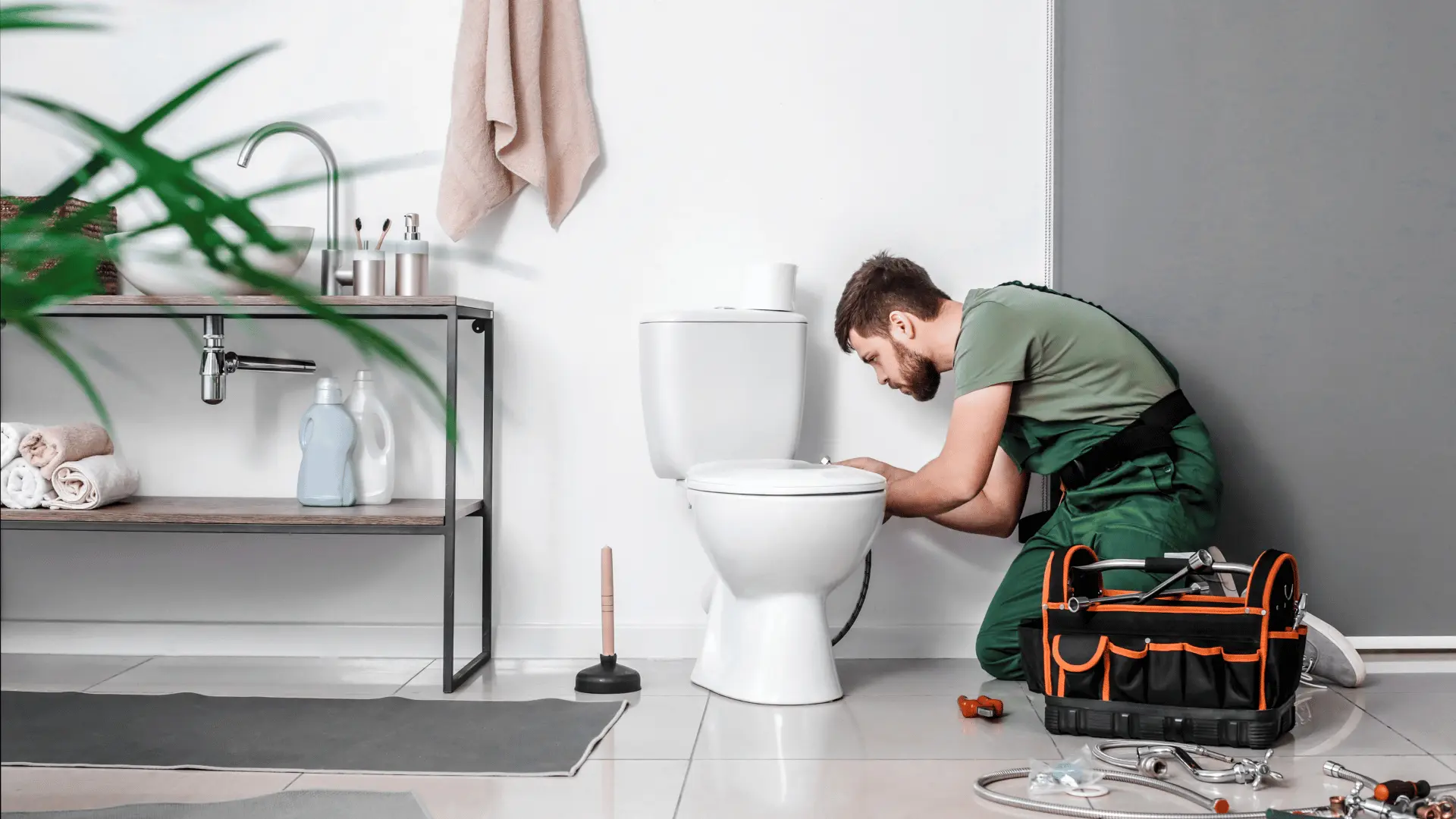
Toilet Leaking at the Base: The Short Answer
Water pooling around the base of a toilet usually means the wax ring that seals the toilet to the floor drain has failed. Every flush sends water past that seal, and a share of it escapes at the floor instead of going down the drain. The fix is to pull the toilet, scrape off the old wax, fit a new ring, and set the toilet back down squarely. A plumber typically charges $150 to $300 nationally for that job, and the ring itself costs $10 to $20.
Other causes sit behind the same puddle, which is why the source matters before anyone lifts the toilet. Loose bolts can let the toilet rock and break the seal, a crack in the bowl can weep at the base, and a damaged flange can leave the ring nothing solid to seal against. Our full toilet installation guide covers resetting and fitting a toilet in full, and this guide helps you name the cause first.
First Steps When You See Water at the Base
Start by protecting the floor. Water under a toilet soaks into the flooring and the wood below it, and that quiet damage costs far more than the leak itself. Mop up the water, lay towels around the base, and stop using that toilet until you know the source.
Next, be ready to close the supply valve on the wall behind the toilet. A slow seep does not need it, but close it at once if water spreads, if the toilet rocks, or if you smell sewage, which suggests waste water escaping past the seal.
Make Sure the Water Really Starts at the Base
Not every puddle at the base begins at the base. Water runs downhill and collects at the lowest point, so a leak higher up often shows at the floor first. Dry the whole toilet with towels, the tank, the bowl, the supply line, and the floor around it. Then flush several times and watch where moisture appears first.
Check three common impostors. Condensation on a cold tank in humid weather can drip steadily to the floor. A slow leak where the tank meets the bowl, or at the supply connection, can trail down the porcelain and pool at the feet. A toilet that will not stop running can also send water down the outside, a separate fault covered on our page about a running toilet. Water that appears only at the base, right after a flush, with the tank and fittings dry, is the true base leak.
Cause One: The Wax Ring Has Failed
The wax ring is a soft ring of wax that sits between the bottom of the toilet and the drain flange in the floor. When the toilet is set down, the wax compresses and forms the seal that keeps flush water and sewer gas inside the drain. That seal can fail with age, and it fails sooner when the toilet moves. Once the seal breaks, every flush pushes a little water out at the floor line, and the puddle grows slowly over weeks.
The signs are plain. Water appears at the base after flushing and not at other times, the floor may look stained near the base, and a faint sewer smell can hang around the toilet. The cure is a new ring at $10 to $20. The cost of the job is the labor of lifting the toilet, cleaning both surfaces, and setting it back down without breaking the fresh seal, and a plumber typically charges $150 to $300 nationally for that work.
Cause Two: Loose Bolts and a Rocking Toilet
Two bolts at the floor hold the toilet to the flange, and a pair of tank bolts joins the tank to the bowl on most models. If the floor bolts work loose, the toilet begins to rock a little each time someone sits down. That movement worries the wax seal until it cracks and leaks. Snugging the floor bolts gently, a little at a time on each side, can stop a very early leak, and the word gently matters, because porcelain cracks when a bolt is forced.
Tightening alone rarely saves a seal that has already broken. If the toilet has rocked for months, the wax is likely split, and the lasting fix is still a new ring. A toilet that keeps rocking may sit on an uneven floor or a damaged flange, the last cause below.
Cause Three: A Crack in the Bowl or Tank
Porcelain can crack from a hard knock, from bolts tightened with too much force, or from age and stress at a weak point. A crack low in the bowl can weep water at the base each time the toilet flushes, and a crack in the tank can send water down the back of the bowl to the floor. Cracks are easy to miss, because a fine line in the glaze may only open under the weight and pressure of a flush.
Dry the bowl and tank, flush, and press a dry paper towel along any suspect line. There is no sound repair for a cracked bowl or tank. A cracked toilet is replaced, and new toilet installation labor runs $200 to $450 nationally, with the toilet itself added on top, which is why confirming the source first matters.
Cause Four: The Flange or the Floor Is Damaged
The flange is the ring in the floor that the toilet bolts to and the wax seals against. A flange that sits too low, sits crooked, or has cracked leaves the wax ring with a poor surface, and a new ring on a bad flange leaks again within months. Long running leaks also rot the floor itself. A floor that feels spongy around the base, or a toilet that tilts and will not sit flat, points below the toilet rather than at it.
Flange and floor repair sit on the professional side of the line for most homeowners. The repair has to leave a flat and solid base at the right height before the toilet goes back down, and paying for that judgment once beats repeat resets that fail the same way. A blockage deeper in the line can also back water up to the weak seal, and our page on a clogged toilet covers the signs a clog sits deeper than the bowl.
What a Plumber Does, and What It Costs
A plumber starts by confirming the source, drying the toilet, flushing, and checking the tank, the supply connection, and the base in turn. When the wax ring is the cause, the plumber closes the supply, drains the toilet, lifts it, scrapes the old wax from both surfaces, inspects the flange and the floor, fits a new ring, and resets the toilet with fresh bolts where the old ones have corroded. Expect a service call at $75 to $150 nationally where a plumber charges one, often credited toward the repair, and the reset itself at $150 to $300 nationally with the ring included in most quotes.
You can get free quotes from local plumbers through our matching service, describe the leak as a base leak, and mention whether the toilet rocks and whether any smell is present. That detail helps the plumber allow time for a flange repair if the floor turns out to be the real story.
What You Can Do Yourself, and Where the Line Sits
You can safely dry the toilet and find the first wet point, check for condensation, snug a loose supply connection by hand, and gently snug the floor bolts. Resetting the toilet with a new wax ring is one of the more approachable plumbing jobs, and our installation guide gives the full method, including the warning never to lift the toilet back up once it has been set on fresh wax. The line sits at a cracked toilet, a damaged flange, and a soft floor. Those three call for a plumber, and forcing bolts into cracked porcelain turns a small job into a full replacement.
Get Quotes for a Base Leak
America’s Service Plumber is a free matching service, not a plumbing company. You describe the leak once, and we connect you with licensed local plumbers who repair and replace toilets. Compare the quotes, ask each plumber to confirm the cause before quoting the cure, and hire only if the price and timing work for you. There is no cost and no obligation.
Get a free quote and have the leak found and fixed properly. It takes about a minute.
Frequently Asked Questions
Why is my toilet leaking at the base when I flush?
The usual cause is a failed wax ring, the soft seal between the bottom of the toilet and the drain flange in the floor. When that seal breaks, a share of every flush escapes at the floor line instead of going down the drain. Loose floor bolts, a cracked bowl, and a damaged flange can produce the same puddle.
Is a toilet leaking at the base an emergency?
Treat it as urgent rather than as a someday job. Mop up the water, stop using that toilet, and close its supply valve if water spreads or you smell sewage. The leak itself is small at first, but water soaking into the floor and the wood below it does quiet damage that costs far more than the repair.
Can I fix a toilet leaking at the base myself?
You can dry the toilet and find the source, and resetting the toilet on a new wax ring is an approachable job with a full guide and basic tools. A cracked toilet, a damaged flange, and a soft or rotted floor are professional work, because each needs repair and judgment beyond fitting a new seal.
How much does it cost to fix a toilet leaking at the base?
A plumber typically charges $150 to $300 nationally to pull the toilet and fit a new wax ring, and the ring itself costs $10 to $20. A service call at $75 to $150 may apply and is often credited toward the repair. A cracked toilet costs more, with new toilet installation labor at $200 to $450 nationally plus the toilet itself.
Should I keep using a toilet that leaks at the base?
No. Every flush sends more water into the floor, and a broken seal can also let sewer gas into the room. Stop using that toilet until the seal is renewed or the true cause is fixed. If it is the only toilet in the home, treat the repair as a same day job and say so when you request quotes.