Thawing Frozen Pipes: The Short Answer
Most frozen pipes thaw safely with gentle heat, patience, and the right order. Keep the faucet open so meltwater has somewhere to go, find the frozen section, and warm the pipe starting at the faucet and working back toward the coldest spot. A hair dryer, an electric heating pad, and towels soaked in hot water are the safe tools. An open flame is never one of them, because sudden intense heat can burst the pipe and start a fire.
If the cold snap is still on its way, our guide to how to keep pipes from freezing covers the habits that stop a freeze before it starts. This guide covers the morning a faucet gives you a trickle or nothing at all.
Signs a Pipe Is Frozen, and Signs It Has Burst
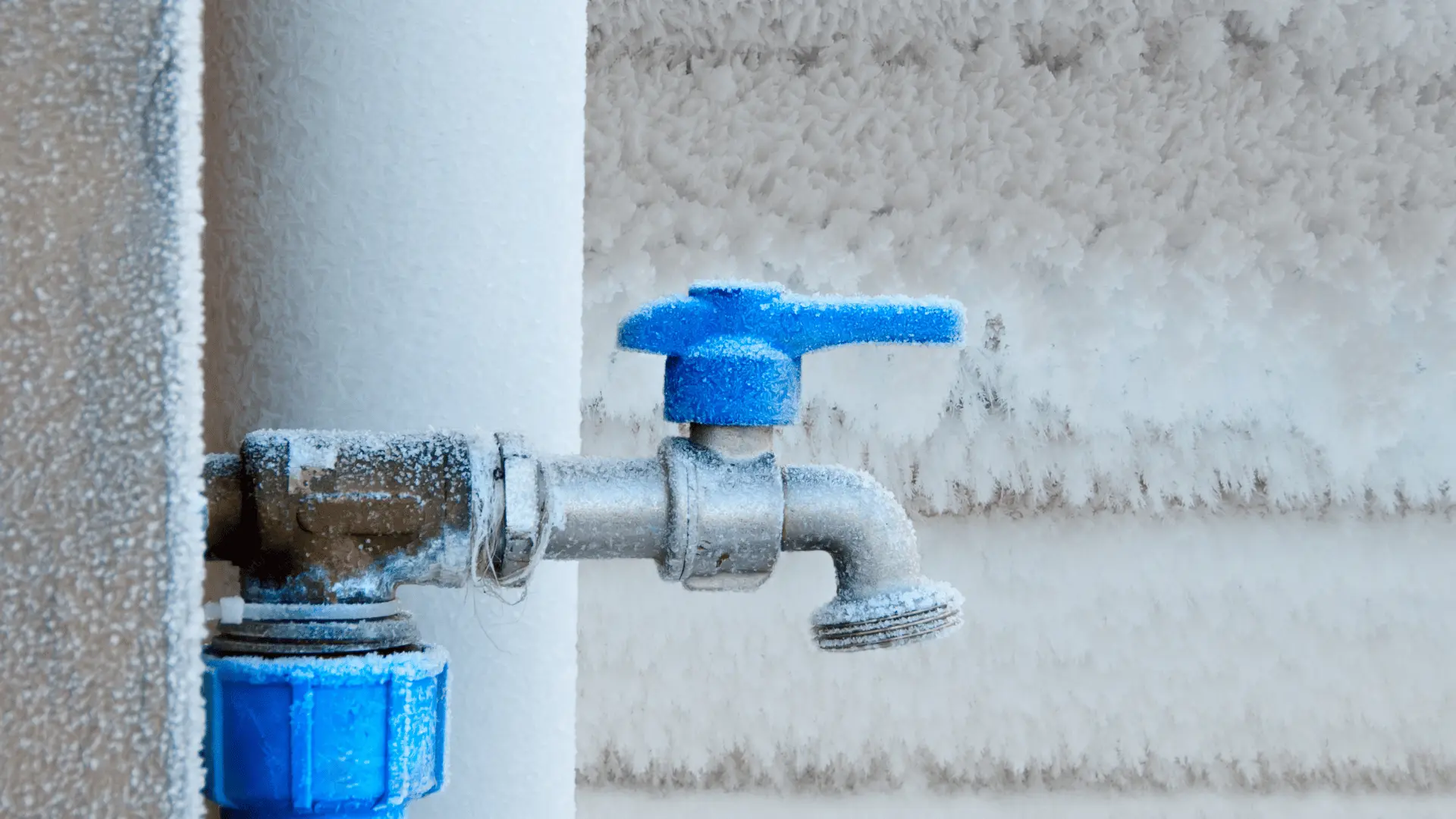
A frozen pipe usually announces itself at one faucet. You open the tap and get a trickle, a sputter, or no water at all, while other faucets still run. Frost on an exposed pipe, a section that feels far colder than the pipe around it, and a faint bulge all point to ice inside. The freeze most often sits along an exterior wall, where the line enters through the foundation, or in an unheated crawl space, attic, basement, or garage.
A burst pipe announces itself differently. Look for water where it should not be, including pooling at the base of a wall, dripping from a ceiling, damp or bulging plaster, and the sound of running water when every tap is off. The split often leaks only once the ice melts and full pressure returns. If you see those signs, shut off the main water supply at once and skip the thawing steps. Our guide to what to do when a pipe bursts walks through the first ten minutes in order.
Before You Apply Any Heat
Three quick moves protect the house while you work. First, know where your main shutoff valve is and confirm it turns, so you can stop the water in seconds if a crack opens up as the ice melts. Second, open the affected faucet and leave it open for the whole job, so meltwater and steam have a safe way out. Third, clear the area, lay old towels along the floor, and keep a bucket within reach.
Keep electrical tools and their cords dry and away from standing water. If water is already near outlets or the electrical panel, stop and treat the situation as a burst pipe job for a professional instead.
What You Need
- A hair dryer, the most useful thawing tool in most homes, because its warm air can be aimed and moved slowly along the pipe.
- An electric heating pad, wrapped around the frozen section.
- Old towels and a bucket of hot tap water, for wrapping the pipe in gentle heat.
- A space heater, only for warming the space around the pipe, kept well away from anything that can burn.
- A flashlight, for reading frost, bulges, and cracks in dark spaces.
- Your main shutoff valve, located and tested before the heat starts.
How to Find the Frozen Section
Start at the faucets. Open each tap one at a time. If only one faucet is weak, the freeze sits on the line that feeds that fixture. If several faucets on one side of the house are weak, the freeze sits closer to where that branch leaves the main line. If no faucet runs, the freeze is likely on the main line near where water enters the home, a harder job that often belongs to a plumber.
Then follow the pipe with your eyes and hands. Look for frost on the surface and feel for the stretch that is noticeably colder than the rest. Pipes inside exterior walls hide their frozen sections, but the coldest stretch of wall and frost where the pipe enters the room narrow the search. Open the cabinet doors and let warm room air reach the wall while you work.
How to Thaw a Frozen Pipe, Step by Step
- Open the faucet the pipe feeds and leave it open. A trickle is a good sign, because moving water melts ice faster than still water.
- Start warming the pipe at the faucet end and work back toward the frozen section. Thawing in this order lets meltwater drain out through the open tap instead of building pressure behind the ice.
- Apply gentle heat with a hair dryer on a warm setting, moving it slowly along the pipe and never parking it on one spot. A heating pad, or towels soaked in hot water and wrung out, do the same job more slowly.
- Keep the heat moving and keep your patience. Exposed pipe often thaws within 30 minutes to an hour. A long frozen run takes longer, and rushing with hotter tools is how pipes burst.
- Watch the faucet. A growing trickle means the ice is giving way. When full pressure returns, leave the tap running for a minute to clear the last of the slush.
- Check every other faucet in the house. If one pipe froze, others may be partly frozen, and catching a second freeze now is far cheaper than a second burst tonight.
- Inspect the entire thawed section slowly while the water runs. Look and feel for cracks, splits, pinhole sprays, and damp joints.
If the frozen section sits inside a wall, warming the room and opening cabinets may still work over a few hours. Cutting into a wall to reach a pipe is a bigger decision, and one of the points where a plumber with thawing equipment earns the fee.
What Never to Use on a Frozen Pipe
Never use an open flame of any kind. No blowtorch, no propane heater, no kerosene heater, and no charcoal. Thawing attempts with flame tools start house fires every winter, and sudden intense heat can weaken or burst the pipe you are trying to save.
Skip boiling water as well. Towels belong in hot tap water, not in a rolling boil, because water that hot scalds skin and the sudden temperature shock can damage some pipe materials. Steady warmth wins this job, and any method that promises instant results is selling risk along with speed.
After the Water Flows Again
A thawed pipe that holds pressure is a warning you got cheaply, and the same section will freeze again on the next cold night unless you protect it. Fit foam pipe sleeves over the exposed run, which takes minutes and costs a few dollars. Seal the air leaks near the pipe, because cold air through a foundation gap is usually what froze that spot. For a spot that freezes every winter, our guide to heat tape explains how electric heat cable adds controlled warmth along the pipe.
For the rest of the cold snap, let the faucet farthest from where water enters the house drip a thin stream on the coldest nights, keep cabinet doors on exterior walls open, and hold the house heat steady, at 55 degrees or warmer if you are away.
When Thawing Is Not a Home Job
The honest boundary is clear. Get a plumber when you cannot find or reach the frozen section, when several pipes are frozen at once or the main line is frozen, when steady gentle heat restores no water after a few hours, or when you find any crack, split, or active leak. A burst section needs to be cut out and replaced, and that is not a safe home job for most people.
On cost, a plumber visit usually starts with a service call fee of $75 to $150, often credited toward the repair when you hire that plumber. Replacing a damaged pipe section with open access typically runs $200 to $600, and the total climbs when walls must be opened. Emergency timing costs more than the same work on a weekday. Ask for the fee and the likely total in writing before work starts. You can get free quotes from local plumbers through our matching service and compare the numbers first.
Get Help With a Frozen or Burst Pipe
America’s Service Plumber is a free matching service, not a plumbing company. You describe the problem once, and we connect you with licensed local plumbers who handle frozen and burst pipe repairs. Compare the quotes and hire only if the price and timing work for you. There is no cost and no obligation.
Get a free quote and have the repair handled properly. It takes about a minute.
Frequently Asked Questions
How long does it take to thaw a frozen pipe?
It depends on the length of the frozen section, the pipe material, and how much of the pipe you can reach. A short exposed section often thaws in 30 minutes to an hour with a hair dryer. A long section inside a wall can take several hours, and a section you cannot reach at all may need a plumber with thawing equipment.
What is the fastest safe way to thaw a frozen pipe?
The fastest safe method is steady gentle heat applied in the right order. Keep the faucet open, start warming the pipe at the faucet end, and work back toward the frozen section with a hair dryer, a heating pad, or towels soaked in hot water. Open flame is faster on paper and is never safe, because it can burst the pipe and start a fire.
Can a frozen pipe thaw on its own?
Yes, if the weather warms and the pipe has not burst, the ice can melt on its own. The risk is that a pipe damaged by the freeze often leaks only once water pressure returns, so an unattended thaw can mean an unattended leak. If you let a pipe thaw on its own, check the whole section for cracks and drips as soon as water flows again.
How can you tell if a frozen pipe has burst?
Look for water where it should not be, including pooling at the base of a wall, dripping from a ceiling, damp or bulging plaster, and the sound of running water when every tap is off. A faucet that gives no water while the main supply is on, paired with any of those signs, points to a burst rather than a simple freeze. Shut off the main water supply at once.
When should you call a plumber for a frozen pipe?
Call a plumber when you cannot find or reach the frozen section, when several pipes are frozen at once, when gentle heat restores no water after a few hours of steady work, or when you find any crack, split, or leak. A burst section needs to be cut out and replaced, and that work is rarely a safe home job.