
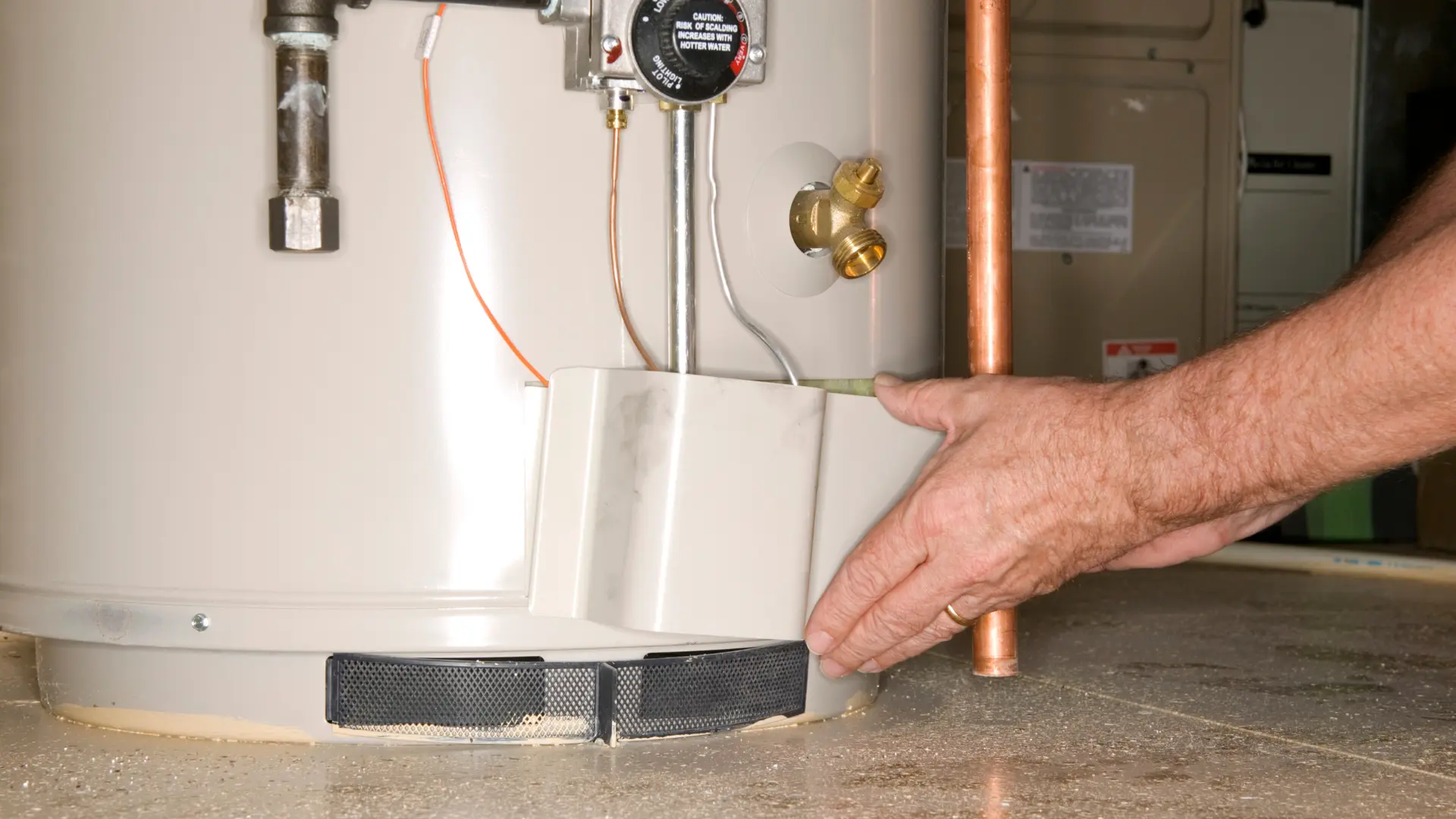
How to Relight a Water Heater Pilot Light: The Short Answer
A standing pilot is a small flame that burns all the time at the base of a gas water heater, ready to light the main burner when the tank calls for heat. When that flame goes out, the burner cannot fire and the water slowly goes cold. Relighting it is a short job with no tools beyond a flashlight and, on older heaters, a long lighter. Turn the gas control knob off, wait at least five minutes, turn the knob to pilot, press and hold it down, light the pilot, keep holding for 30 to 60 seconds, and turn the knob back on. The steps below walk through each part in order, with the safety checks that come first.
Safety First, Before You Touch the Knob
One warning outranks every step in this guide. If you smell gas strongly near the heater, if the smell is growing, or if you feel dizzy or unwell, do not try to light anything. Do not flip light switches or use a phone near the heater. Leave the home, then call your gas utility or emergency services from outside and let them check the heater first. A faint trace smell right at the burner after a pilot has just gone out is common. A strong and building smell is a stop sign, full stop.
Two more checks cost nothing. Keep the area around the heater clear, so nothing flammable sits against the tank. And read the lighting instructions printed on the tank itself before you start. Where that label and any general guide differ, the label on your tank wins.
Confirm the Pilot Is Really Out
Start by confirming the pilot is the problem. Look for the access panel near the bottom of the tank, below the temperature control. Many heaters have a small viewing window in that panel. Peer in with a flashlight. A lit pilot shows as a small blue flame. No flame, with cold water at every tap, points to a pilot that has gone out.
Know your heater type before you go further. Only gas heaters have pilots, and only some of those have a standing pilot you light by hand. Many newer gas heaters light themselves with an electronic igniter and have no standing flame at all, and electric heaters have no pilot of any kind. If your heater has an igniter button that clicks, it still uses a pilot, lit by that spark. Our page on a failing water heater covers the other faults that leave you with cold water when the pilot turns out to be lit and fine.
What You Need
The list is short. A flashlight helps you see the viewing window and the flame. Older heaters without a built in igniter need a long lighter, the kind made for grills and fireplaces, so your hand stays clear of the burner opening. The manual for your heater, or the label on the tank, gives the exact knob positions. That is all. If a step seems to need force, stop. Every control on a gas valve should move with light hand pressure.
The Relighting Steps, In Order
- Turn the temperature control down to its lowest setting.
- Find the gas control knob on the valve at the base of the tank. Turn it to off. Some knobs must be pressed in slightly before they will turn.
- Wait at least five full minutes. This pause matters. It lets any gas that collected near the burner clear away, so you are not lighting the pilot into a pocket of unburned gas. Do not shorten it.
- Remove the access panel or look through the viewing window so you can see the pilot opening, and locate the pilot button or knob position marked pilot.
- Turn the gas control knob to pilot. Press the knob or the separate red reset button down and hold it. Holding it opens the gas path to the pilot only.
- While still holding, light the pilot. Press the igniter button until it clicks, once or a few times, or bring the flame of the long lighter to the pilot opening. A small blue flame should appear.
- Keep holding the knob or button down for 30 to 60 seconds after the flame appears. This warms the thermocouple, the small safety sensor that sits in the flame and tells the valve the pilot is lit. Let go too early and the flame dies at once.
- Release the knob or button slowly. The flame should stay lit on its own. Turn the gas control knob to on, set the temperature back to your usual setting, and replace the access panel. You should hear the main burner fire within a minute or so.
After It Lights, Check the Flame and the Burner
Take a minute to look at what you have lit. A healthy pilot flame is mostly blue, steady, and large enough to wrap the tip of the thermocouple beside it. A flame that is small, yellow, or wavering is telling you the pilot opening is dirty or the flame is not reaching the sensor properly.
Then confirm the whole system works. Run a hot tap after about half an hour and check that the water is warming. A single outage after a storm, a draft, or work on the gas line often never repeats.
If the Pilot Lights but Will Not Stay Lit
A pilot that catches, burns while you hold the button, and dies the moment you let go is the classic pattern of a thermocouple that is worn out, dirty, bent away from the flame, or coated in carbon. The sensor is not convinced the flame is real, so it closes the gas path as a safety measure. A pilot that stays lit for hours or days and then drops out again can point the same way, or to a dirty pilot opening, a kink in the small flex tube that feeds gas to the pilot, or a strong draft at the base of the tank.
Our guide to why a pilot light keeps going out works through each of those causes in turn. One honest caution belongs here. Relighting the same pilot every week is a symptom, not a routine, and the heater needs a diagnosis rather than another match.
If the Pilot Will Not Light at All
If no flame appears at all, work through the plain causes first. Confirm the gas supply to the home is on and that other gas appliances work, since a supply outage or a closed valve upstream leaves nothing to light. Confirm the knob is truly at pilot and pressed fully down while you light, and that the igniter clicks or your lighter flame reaches the pilot opening.
Stop there. A pilot that gets gas and a spark or flame and still will not catch, or parts that look damaged, corroded, or melted, are beyond relighting. Do not keep trying for long stretches, since every attempt sends a little more unburned gas to the burner area. That is the point to bring in a plumber.
Where the Line Sits, and What a Plumber Costs
Relighting is the homeowner part of this job. Replacing a thermocouple, a gas control valve, or any gas line part is not. Those jobs involve gas connections that must be taken apart and proven tight afterward, and they sit on the professional side of the line in every maker guide. The same goes for any heater where you smell gas, see scorch marks, or find the flame burning somewhere it should not.
A plumber will test the thermocouple, clean or replace the pilot assembly, and check the gas control and the venting. Expect a service call at $75 to $150 nationally where a plumber charges one, often credited toward the repair, and typical small repairs at $150 to $450 nationally depending on the part. You can get free quotes through our matching service, and saying in advance whether the pilot lights but will not stay lit, or will not light at all, points the plumber at different parts.
Get Quotes for a Pilot That Keeps Dropping Out
America’s Service Plumber is a free matching service, not a plumbing company. You describe the problem once, and we connect you with licensed local plumbers who service gas water heaters. Compare the quotes and hire only if the price and timing work for you. There is no cost and no obligation.
Get a free quote and have the heater checked properly. It takes about a minute.
Frequently Asked Questions
How long should I wait before relighting a pilot light?
Wait at least five full minutes after turning the gas control knob to off. That pause lets any gas that collected near the burner clear away, so you are not lighting the pilot into a pocket of unburned gas. The label on your tank may state a longer wait, and where it does, follow the label.
Why does my pilot light go out as soon as I release the button?
The usual cause is the thermocouple, the small safety sensor that sits in the pilot flame. If you let go before it warms up, which takes 30 to 60 seconds of holding, the flame dies. If you held long enough and it still dies at once, the thermocouple is likely dirty, bent away from the flame, or worn out.
Is it safe to relight a water heater pilot light myself?
Yes, relighting is normal homeowner work when you follow the label on the tank and the safety checks in this guide. The hard exception is the smell of gas. If you smell gas strongly, do not light anything, leave the home, and call your gas utility or emergency services from outside.
How much does it cost to fix a pilot light that will not stay lit?
Expect a service call at $75 to $150 nationally where a plumber charges one, often credited toward the repair, and typical small repairs at $150 to $450 nationally depending on whether the fault is a thermocouple, a dirty pilot assembly, or the gas control. Relighting alone, when nothing is broken, is free.
How often is too often to relight a pilot light?
Once after a clear cause, such as a storm, a strong draft, or work on the gas line, is normal. A pilot that needs relighting every week, or that drops out again within days, has a fault behind it, most often the thermocouple or a dirty pilot opening, and it needs a diagnosis rather than another match.